Aussie MSSPs explain what keeps them up at night
As part of Global Cybersecurity Week, we asked three cybersecurity partners about the trends in the market.

The cybersecurity threat landscape has evolved rapidly over the past 12 months, even the past 12 weeks.
With the constant evolution of AI models, new attacks surfacing every day and security breaches happening every single day, Aussie partners need to be ready for anything and everything.
For Global Cybersecurity Week, CRN Australia asked three MSSPs what keeps them up at night and how they see the security industry changing.
As the landscape is changing, so too are MSSPs. Some are preparing for the worst, making sure all their bases are covered so when an attack happens, they are ready to respond.
MSSPs are also seeing a change in attitude with their customers, as they want outcome-based services rather than solution-based services, so now they are pivoting to meet client needs.
Some partners are seeing a shift within the boardroom as security and AI become the top conversation, levelling revenue and profit.
Read below of what keeps MSSPs up at night.
“Can’t recall anything with the potential to change [the industry] this quickly”
The one technology that has sent the industry into a frenzy is AI. And Michael Demery, founder and CEO, Seccom Global said, “you’d have to have your head under a rock to think AI hasn’t changed our industry”.
“I’ve been in cyber for a long time, and I honestly can’t recall anything with the potential to change it this quickly,” he noted.
“AI is a double-edged sword. It has already changed the speed and scale of attacks, but on the flip side, it has made threat hunting better, faster and more effective.”
However, on the other hand, Demery said for an MSSP, AI obviously also gives them a “real opportunity”.
“We’re investing in automation that brings information together, adds context to alerts and takes repetitive work off our team, meaning increased productivity,” he said.
“However, AI hallucination is a real issue and if you’re not checking its output against the evidence, you can make serious mistakes. We must remain accountable for the actions we take, and that means validating everything.”
AI is also changing their conversations with customers, Demery said.
“Businesses are adopting AI tools, often before they’ve thought about security or governance, so this is a big conversation we are having regularly now, with customers looking to us to give guidance,” he said.
“Customers are also using AI to check our work. They can put a report or design through a tool and question it in minutes. The tool won’t always be right, but we should be able to explain and stand behind what we deliver.
“For me, the test is how we can use AI to help us detect and respond faster, protect customer data, and help our people make decisions they can verify and explain.”

In terms of shifts in the market, Demery said customers are shifting from a product or solution conversation to an outcome conversation and sales teams need to make that shift in mindset to keep up and establish themselves as trusted advisors that solve challenges.
“Customers no longer want to talk about a solution. Rather, they want to talk about reporting to their board, meeting compliance requirements and reducing complexity – none of those are product conversations they are all outcome conversations,” he said.
“There’s no doubt AI will also drive a lot of change, both for service providers and for customers. I see a real role for the channel in helping customers get value from AI while maintaining a secure environment and protecting their data.
“I also see a shift in the way partners do business, with AI giving us the ability to deliver better, faster and more effectively and efficiently than ever before.”
“At the end of the day, it's about trust”
For Megan Visser, chief customer and marketing officer, Otto IT the continually evolving threat landscape continues to keep her up at night.
“Cybercriminals are becoming more sophisticated, better funded, and increasingly leveraging automation and AI to scale their attacks,” she said.
Visser explained that the challenge is not just defending against known threats, it's anticipating what's coming next while helping customers navigate an increasingly complex security environment.
“Most organisations are dealing with skills shortages, growing compliance obligations, and a rapidly expanding attack surface. Our responsibility is to stay ahead of those risks and ensure our customers can focus on running their businesses with confidence,” she said.
“At the end of the day, it's about trust. When a customer puts their security in our hands there's a significant responsibility that comes with that.”

Visser believes that cyber will become more embedded into every technology conversation.
“Security is no longer a standalone discussion or an optional add-on. Customers increasingly expect security to be built into every solution, every project, and every business outcome,” she said.
“For channel partners, this means moving beyond simply reselling security products and focusing more on delivering strategic advice, managed services, and ongoing risk management. Customers are looking for partners who can simplify complexity and provide clear guidance, not just tools.”
Visser also expect growing demand around identity security, managed detection and response, security awareness, and AI governance.
“As organisations continue to adopt cloud, AI, and hybrid work environments, the need for trusted cybersecurity expertise will only increase,” she noted.
“The partners that succeed will be the ones that can combine technical capability with strong customer relationships and a deep understanding of business risk. That's where the real value is being created.”
Small business impact
Running an MSSP in regional South Australia, Helene Martin, managing director, Pit Stop Technologies said she has seen five local small businesses hit by cyber attacks.
“Local businesses, the kind where everyone knows the owner,” she added.
“Most of these attacks aren't clever. Stolen passwords, fake invoices, remote access scams. But they arrive faster now, and a small business can't keep up on its own.”
Martin explained that a fake invoice or a bank detail scam doesn't stop at the business they look after.
“It lands on their customers and suppliers too. We help clients put a clear disclaimer on every invoice, quote and email signature saying they will never ask to change bank details by email. It costs nothing, and it gives the people on the other end something to check against,” she said.
“And in the regions, it's personal. When a business gets hit, it's someone we see at the bakery or on the football sideline.”
Martin noted that MSSPs themselves are also under threat.
“Attackers have worked out it's more efficient to hit the provider than the client, because an MSP holds the keys to every business it looks after,” she said.
“And some in our industry aren't holding themselves to a high enough standard. We've onboarded clients who still had admin accounts in their Microsoft 365 tenant from three previous IT providers. Nobody had removed them. That's three sets of keys to the business that nobody was watching.
She continued, “Cleaning up properly when a client leaves or during onboarding should be the bare minimum. If we want small businesses to take security seriously, our industry has to go first.”
Martin explained that the cybersecurity rulebook is “changing”.
“The ASD [Australian Signals Directorate] has confirmed the Essential Eight will be phased out over the next two years and replaced by a broader Essentials series that covers cloud and, eventually, AI,” she said.
“It's the right move, but I still go out and talk to business owners who have never heard of the Essential Eight. The industry is debating its replacement while a big part of small business hasn't started.
“Our job doesn't change. We keep showing up, keep explaining it in plain English, and make sure 'retired' never becomes an excuse to stop.”
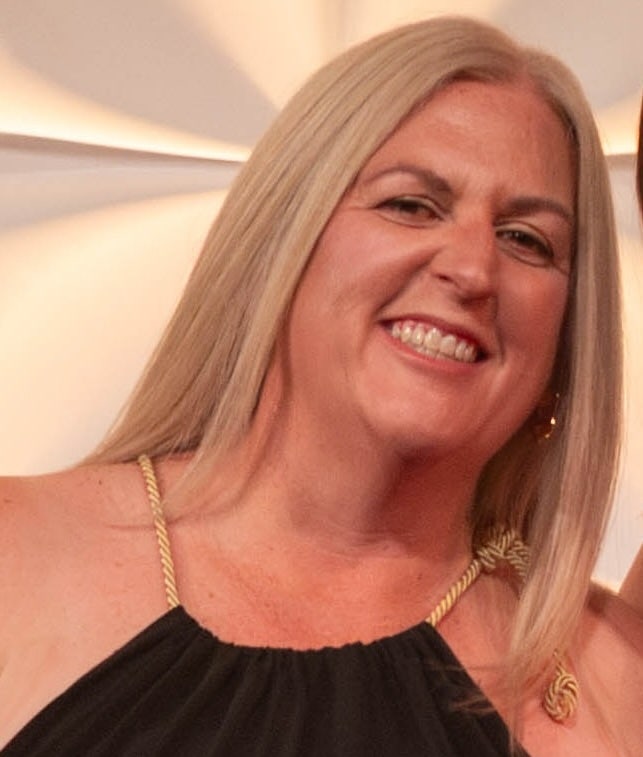
Martin said clients, insurers and tender panels want evidence, not a tick in a box.
“That's why we're seeing the channel line up behind SMB1001. For a small business it's a realistic, certifiable starting point, and it's already asking hard questions about things like responsible AI use,” she said.
“We hold SMB1001 Gold ourselves and we're working toward Platinum, because you can't ask clients to meet a standard you won't meet yourself. Providers who can show their working will win. Those who can't will get found out.”
Insurance is part of this too, Martin noted.
“Most small businesses have never had their insurer raise cyber cover with them, because the insurers don't know how to have the conversation, so it just doesn't happen. We're the ones bringing it up with owners and encouraging them to take it out,” she said.
Martin explained that the line between MSP and MSSP is gone.
“If security isn't built into everything you do, you're not really managing anything,” she said.
“And the more automated this industry gets, the more trust matters. Regional businesses want someone local who knows them and picks up the phone.
“That's always been our model, real people, real solutions. I think the rest of the industry is about to learn why it matters.”
This story is a part of our CRN Cybersecurity Week coverage. Read more security stories here.