Red Hat ANZ execs discuss how the new partner program is impacting Aussie partners
John Nelson and Enzo Compagnoni also mention the shift partners are making from VMware to Red Hat.
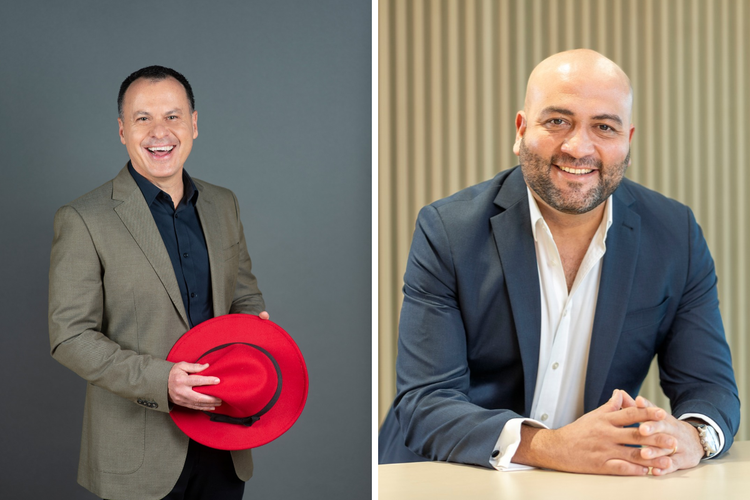
Red Hat made changes to its partner program more than a year ago, and according to local Australian executives this new program is “resonating” with its ecosystem.
The company made several changes including launching a new specialised partner program and a new partner demand centre.
Speaking to CRN Australia, John Nelson, head of ecosystem ANZ at Red Hat said what they evolved last year and took to market is hitting their partners “effectively”.
“It's showing up in our results. It's showing in how they're penetrating the market in particular segments, especially around government, banking and finance. That's still a strong play,” he said.
“It's impacting the digital infrastructure of Australia and impacting every single individual that's dependent on technology that gives them access to banking. That gives them access to digital identity, government services.”
Nelson explained that Red Hat is finding partners are building the capability, investing in their people, and coming back to them with new ideas about how they can make impact on the platforms they provide.
“That's been that's been a significant lift,” he added.
Enzo Compagnoni, regional vice president and general manager ANZ at Red Hat said he has seen an acceleration of deal registrations which has converted into incremental business for the open source company.
“When you invest into the partners and you make it more profitable. They can scale up the practices,” he said.
"We're seeing newer partners coming on, people scaling up and developing skills, and now we're seeing the translation. If I just look at this year alone, it's been accelerating quite dramatically. When we looked at it before, when we saw the first half versus recent the volume has pretty much almost doubled, which is fantastic.”
According to Nelson, 80 percent of Red Hat’s revenue flows through the partner ecosystem.
“It's no longer a sideline conversation that we meet the partner at the transaction at the procurement stage,” he explained.
“We are building, they're coming to us and saying, this is a lucrative partner program. We want to invest, and we're seeing them execute together as one team with our sales folk.”
For Nelson, the “customer first, partner always” mantra is still alive and well.
“That 80 percent will only start lifting as we see the mantra that we established in what maybe three years or two years ago now about customers first partner always. That's a real internal mantra that we have. It's starting to play out in field, really happening,” he said.
“Earlier this year at our kick off, we had our CRO stand up and say, ‘own the arena’, and what he meant by that was walking into that arena with our partners.”
Read more of our interview with Enzo Compagnoni and John Nelson below.
CRN: Our US counterpart reported that VMware migrations are driving Red Hat growth, are you seeing that locally?
Nelson: There are two lenses to this. There's the customer outcome and the partner outcome. If you think about the program for VMware coming to an end next year. It's caused, and they've been quite in a vocal with this Broadcom, caused a lot of concern for partners that will effectively no longer operate going into next year. It's a bit of a struggle. Mergers and acquisitions will be big for us, 600,000 VMs on a global level, we have a strong proportion of that in a local piece, and we'll only see that accelerate.
We're seeing that accelerate from managed service providers who are coming to us and saying, the bill is astronomical now. They're looking at their opportunity and saying, what's the opportunity cost for me to do this, as opposed to looking at innovative cycles of innovation. What do I take that cost of that capital and get a true return for my customer goes back to the co-creation piece. What's my alternative? And the alternative is actually containerisation. You should look at it very clearly, what virtualisation did to hardware, containerisation is doing to software. There's definite interest, there's definite procurement, and there are conversations on opportunity cost about where do I take my environment, especially without AI coming in. AI runs on Linux.
It's an opportunity cost that partners look at and say, how do I drive continuous innovation at my customer end without just keeping the lights on and just paying for a renewal. Can you provide me continuous innovation when that comes to the value of our subscription.
CRN: Is there any incentivisation for VMware partners coming to Red Hat?
Compagnoni: I don't think it takes rocket science to work out that if a technology stack becomes five or 10 times more expensive, then the ROI on alternatives becomes more compounded. We were getting already a great adoption of the modernisation and modern platforms because some of those platforms, most of our customers speak to them as legacy platforms, and they're the modern architectures. All that has created maybe an impetus for people to accelerate things that that most of our customers were already on the path to do anyway.
Nelson: It's commercial led almost 50 percent, the other 25 percent is skill set. How do I transition from that? Then the other 25 percent is risk, my competitive landscape. It's not just purely about that the price is going up. It's the individuals I have to procure from and work with are competitive.
But what we do differently is the partner program is completely centred around what we call the CCSP program, cloud service provider. That gives all the tooling and the power back into their hands. As Compagnoni said, there's no lock-in. The challenge that a lot of these customers have is they've got lock-in. There's no lock-in. It's a no-brainer. People are starting to see the power of open source, a subscription-based model, where they can extract themselves in and out of an engagement, and they're de-risking that.
Even if you give me a better price, you got to find myself in the same position in 12 months, 15 months, 18 months. How do I de-risk that? We've got an answer for that. That's the CCSP program.
CRN: What do you hope to achieve in 2027?
Compagnoni: For me, as I talked to you about those inflection points and how we've moved from the Linux to hybrid cloud to now AI. We're already working with a lot of customers around moving beyond that, and our partners are helping us, taking them from experimentation on AI to production.
I want to see us continue to grow as we have been around the that piece and having more and more move across into production into platforms because it's just additional workloads, and we're a platform company, and these are the new workloads that'll be driving onto it.
We're helping a lot in that space because we've got a lot of heritage and experience in knowing how to run production workloads, and this is another production workload that we're looking at.
A year from now, let's say, ‘hey, we've moved a lot more people from pilots to production’, and I expect to be saying that. Same thing with virtualisation. From a year ago, we've seen virtualisation opportunities with our partners scale a lot more, and I expect that to continue to accelerate, as we've seen with all of our global virtualisation and helping those customers with their challenges there to modernise their virtualisation.
Seeing that exponentially keep growing, and of course all of the other areas, but right now those are probably the newer areas that I'd like to see exponentially grow in a year's time.
Nelson: If we go to some of the trends I'm seeing and what will probably happen as a result of the engagements this year, we'll see more specialised partners, and we encourage that OpenShift expertise, very deep, very domain style expertise industry side. We'll see a lot of that going into next year, and we're only encouraging it.
The volume of those engagements, the value of those engagements, to keep on trend, to retain that three times profitability. That's the two things I see from a partner lens that we do well, and we execute as one team. We'll be sitting here talking about that again next year, probably with some real-life examples.
This interview was edited and condensed for clarity.