Lenovo’s Astrid Groves on the “exciting” service opportunity for partners
The director for distribution and commercial channel at the Aussie arm sees a bright future for partners and AI.
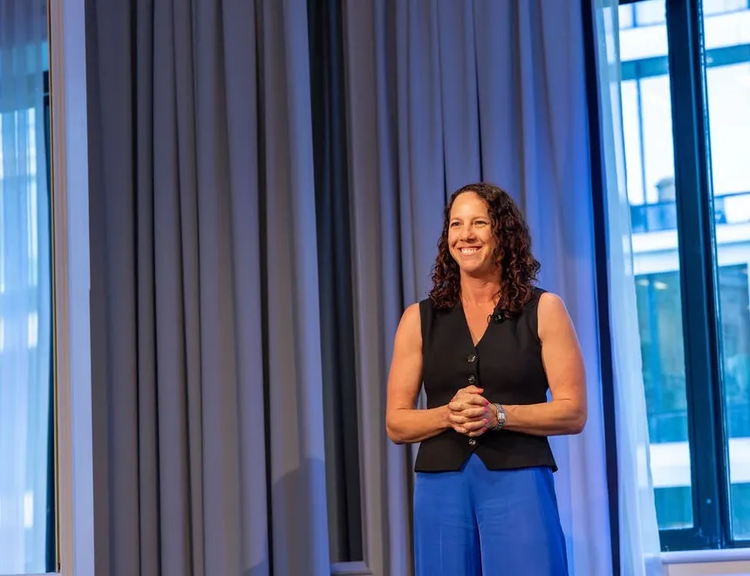
As AI continues to reshape the channel landscape, Astrid Groves, director for distribution and commercial channel at Lenovo Australia believes they have a pivotal role to play in delivering AI services.
Speaking to CRN Australia exclusively, Groves explained that AI governance, auditing agents and the operationalisation of the technology are some of the avenues partners can monetise.
“Technology is one thing, but it's never been about technology,” she said.
“It's about how you implement it, how you construct it, how you deliver it, how you manage it ongoing that avoids the [AI] slop and that's where the partners really have a massive role to play.”
Groves said this is a “exciting” services opportunity because the lifecycle doesn’t look like a regular infrastructure lifecycle.
“It's not ‘sell at once, let's go refresh it in five years’. It is ongoing services for their customers,” she said.
“That's probably the biggest opportunity in market for [partners] if they're geared up and can build practices, business models, offerings around that. There's a huge opportunity to get ahead of the compliance that's going to be coming at us.”
When she is speaking to partners, Groves has seen some completely change their business models because of AI, while others are taking the “sit and wait” approach.
“There's so many areas of AI. It's almost like a whole subset of technology, it's not one thing. Some are going down that specialist path. Some are going down that strategy consulting path.”
Read more of our interview with Astrid Groves at Lenovo Australia below.
CRN: What is something that you’ve learned at Schneider Electric that you’ve brought to Lenovo Australia?
Astrid Groves: In my time at Schneider, there was this transition that we went on because of relevance. It was a time where the whole market went to cloud. What was left on edge and on-premise was important, but there was a lot less of it. Therefore, you become a little bit less relevant because the partners are now going, ‘I'm going to sell data centre solutions or I'm going to sell more cloud’.
There was all of this competitive pressure from Eaton, Vertiv, and Cyberpower, and everyone trying to enter that space in the IT channel. Where first time round, ATC had majority share of channel space. There was hardly anyone that would partner with Eaton and partner with our competitors. But because that change had happened, part of the strategy that I deployed over there was we have to turn up and think differently, and we have to turn up and talk differently to our competitors.
What's that differentiator? And that's where we started to leverage Schnieder’s sustainability position. Learning to talk about that and learning how to differentiate in that way gained us relevance to the partner community, much more effectively.
I didn't think I'd be doing almost the same strategy over here. In terms of if I look at the way AI is rolling out in market. If I look at the partners and where the opportunity is, there is a need for us to differentiate from our competitors. We truly do differentiate from the HPs and the Dells and those players, because we're not just an infrastructure player anymore. That was something that has been a learning curve to go. Yes, we sell an incredible amount of PCs. We're growing market share at a rapid pace in server and storage markets.
But, the conversation with partners when you're talking about agentic AI solutions that consider edge and how do you plug all that together, the conversation is different. But now it's about agentic AI, LLMs and physical AI and what that looks like, as opposed to sustainability. The playbook's the same.
CRN: How has it been re-educating partners on this new journey?
Groves: It is easier to get a seat at the table. When I talk to the partners, there are so many vendors talking about AI all the time, but everything is at this lofty level.
What the partners want are tangibles, what does this look like for my customer? How do I roll it out? What are the things I need to do if I'm building a business around this? What are the actions that I can take in my business, rather than thought leadership loftiness. Bringing that tangibleness through case studies and stories.
I was at an event a little while ago, and something that really stood stuck out for me was, if you're not using AI in your business, if you're not patient zero within your organisation, then it's hard to stand there with any credibility in emerging technology world like AI.
Having the depth of experience as Lenovo and being able to pick up those case studies and go ‘this is how we learnt this, this is how we've trained these agents’. When you're launching a product to market, we've already got a case study, and it's a global organisation using that case study, it just happens to be us.
CRN: How has the memory shortage impacted you at Lenovo Australia?
Groves: We've been faring way better than a lot of other people in market. If you look at the memory market, not just memory, but also the CPU, GPU market as well. You have this situation where because of inferencing AI, because of training AI, neoclouds, big frontier labs, they've bought capacity across the memory and CPU manufacturers to some extent.
Result of that is everyone's on allocation as vendors. We've always got this open book PO that goes send me what I can get, when I can get it, at the price you'll give it to me, so it lands.
We get a daily allocation at a daily price, and it's hard to judge what that price is going to be, which presents pricing challenges that we see in market and presents a whole lot of other stuff.
The difference for Lenovo is we're recognised as number five on Gartner's top 25 supply chain. We've moved from number eight to number five this year, and has nothing to do, but it's not a supply chain story. It's an AI story.
If I look at how we manage our supply chain, we're the only manufacturer or only vendor in our category that manufacture our own equipment. Thirty-two different manufacturing plants we own our manufacturing to supply end to end, and that's a unique position. Then you layer in that we've run an agentic AI solution called iChain that has been rolled across our manufacturing and supply part of our organisation. It means we've got end-to-end visibility, we've got agentic contingency planning. We have all of these skill sets that help us, and what that means for market is we've been able to direct supply on the notebook side towards a great range of notebooks that have been consistently available in market, and we haven't seen much supply challenges on that side.
On the server and infrastructure side, we've been able to put that capability into real life for our customers. If you're a partner, you can go into our portal and configure to order a server based on the exact componentry that's on the floor in a manufacturing plant, that is updated three times a day because sustainable AI. We know the exact cost. We know exactly how many there are because it's sitting on manufacturing floor, we've got our daily allocation. We've got our daily price.
You can configure to order that, and we can ship a server 10 to 15 days. We launched first of October. We launched AI Express as well. Same methodology, but with GPU enabled server infrastructure for different types of applications, business sizes, user accounts, agent loads. You can get them in 15, 20, 25 days, depending on what size you're going for that's a huge differentiator in today's market.
That fits 80 percent of the market requirements. If you're a neo cloud provider, I'm probably not going to be able to give you what you need. Within that time frame, but for mid-market and enterprise Australia, the solutions are available. I think that is a huge outcome of how we run that agentic AI across our manufacturing plants.
CRN: What is your message to partners?
Groves: The more complex technology gets, the more you have to lean on partnerships. Whether that's with your vendor, whether it's with your distributor, whether it's with friendly competitors in the market or people that are specialising in areas. Or investing in building services in areas that you're not doing, and therefore you can build alliances between you.
Leaning into partnerships is the answer to more advanced technological deployments, and it's also part of the answer to what's happening from working capital costs. How do you get to market fast without necessarily having to build.
You can buy, you can partner, or you can just decide not to do it in the first place.
The job of a vendor always is to help future proof our partners. If we could add value to our partnerships in any way. We want to be there to help future-proof their businesses, future-proof their plans, and we're offering services, motions, playbooks and skilling programmes to help them future-proof themselves. If the answer to advanced technological deployments and advanced technology in emerging markets or emerging technologies is about leaning into partnerships, then we want to be a partner that they lean on.
This interview was edited and condensed for clarity.