Increased complexities and costs: Cybersecurity vendors on how the channel is shifting
Leaders from Check Point, OpenText Cybersecurity and WatchGuard Technologies give us their take on the current market.
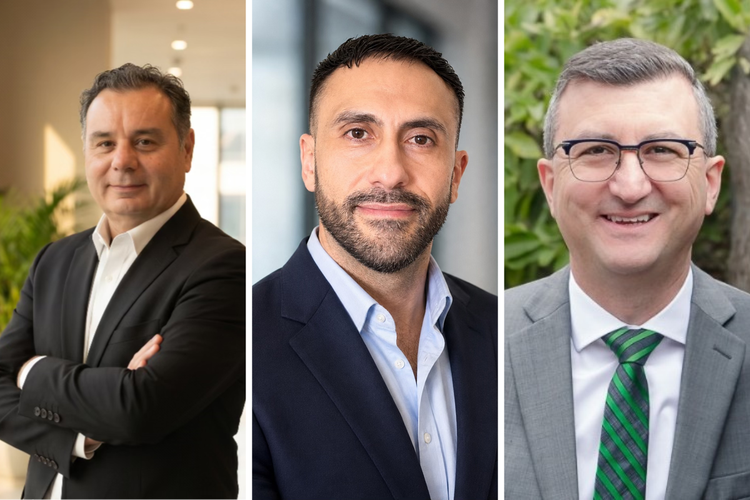
Cybersecurity vendors are evolving rapidly to keep up with the demand from their partners and customers.
New ways to breach a company emerge nearly daily and the cost of being secure, or even worse the cost of getting breached is getting higher.
From the shift in customer demands, to the looming danger of shadow IT these are some of the trends impacting cyber vendors.
For Global Cybersecurity Week, CRN spoke to three leaders within the cybersecurity vendor space about how the landscape is shifting.
Increasing complexities
For Leo Lynch, head of channels ANZ at Check Point Software he sees one of the primary concerns among Australian private and public sector enterprises is the increased complexity and cost associated with managing multiple systems and vendors.
“While organisations may need to invest in additional hardware, software, and personnel to support these systems, ensuring interoperability between disparate systems can be difficult,” he said.
“Organisations may need to develop custom integration solutions or rely on third-party tools to manage less vendors, while at the same time needing to protect themselves from increasingly sophisticated cyberattacks, they will need to consolidate more, to avoid being locked into a single vendor.”
Lynch noted that there will also be a “growing role” for support from managed service providers and managed security service providers.
“These specialised firms can help businesses design, implement, and manage redundant systems, reducing the burden on internal IT teams,” he said.
“By adopting a prevention-first approach and leveraging the expertise of MSPs, organisations can build resilient infrastructure that can withstand even the most sophisticated attacks.”
Shifting from product to outcomes
Another trend cyber vendors are noticing is the shift from selling security products to delivering security outcomes.
In a recent CRN report the APAC channel is telling us that customers are struggling with complexity, skills shortages and the sheer operational burden of running cybersecurity effectively.
Steve Stavridis, VP, APJ SMB/C sales, OpenText Cybersecurity said, “In fact, 50 percent of respondents identified a lack of security expertise and manpower as a major barrier to faster detection and recovery, while 44 percent cited fragmented tools and 37 percent alert fatigue.”
Stavridis said this data tells us something important, the challenge isn't simply that customers need more security technology.
“In many cases, they need help making the technology they already have work together,” he explained.
“We're seeing that change the role of the channel. Almost half of partners are seeing increased adoption of hybrid security models, 46 percent are seeing growth in co-managed approaches and 43 percent are seeing movement from in-house security towards managed services.”
He added, “The channel is moving from being a technology reseller to becoming an operational extension of the customer's security team. And the commercial opportunity reflects that.”
Stavridis explained that cybersecurity can't just be about preventing the breach.
“We have to assume that things will fail, whether that's an attack, human error, a misconfiguration, an application failure or a cloud outage, and make sure the business can detect it, contain it and recover quickly,” he said.
“That's why I increasingly think about cybersecurity in terms of resilience rather than just prevention.”
As a vendor, Stavridis said their responsibility is not simply to give partners another security product to sell.
“It's to help them simplify the environment, reduce operational complexity and give customers measurable outcomes, better protection, faster detection and, critically, faster recovery,” he said.
“Because ultimately, the question isn't whether someone will try to attack your business. The question is how much business impact you experience when they do.”
Consolidation in the channel
Anthony Daniel, managing director, ANZ and Pacific Islands at WatchGuard Technologies is seeing the channel move towards consolidation.
“Partners and customers are increasingly looking to reduce the number of disconnected security tools they manage and instead bring security, identity, endpoint, network and cloud controls together,” he explained.
“For the channel, that creates an opportunity to move beyond simply reselling individual products and become more strategic. MSPs in particular are being asked to deliver broader security outcomes, while keeping environments manageable and commercially sustainable.”
Daniel is also seeing a growing focus on SaaS visibility and Shadow IT.
“Organisations often have far more applications, users and identities operating outside traditional security controls than they realise, so visibility and governance are becoming increasingly important,” he added.
For Daniel, the speed at which the threat landscape is evolving is probably the biggest concern for him.
“Attackers only need to find one weakness, whether that is an unpatched system, compromised identity, exposed SaaS application or a convincing social engineering attack,” he said.
“Meanwhile, customers and partners are dealing with increasingly complex environments and a shortage of security resources.”
He added, “The challenge for vendors is making sure we continue to simplify security rather than add more complexity. If we can give partners better visibility, faster detection and practical ways to respond, we put them in a much stronger position to protect their customers.”
The AI of it all
AI is transforming the cybersecurity market, empowering vendors with advanced capabilities while forcing them to contend with increasingly sophisticated threats.
Lynch at Check Point said the technology is “opening new conversations” with customers and with different operational divisions within Australian businesses beyond the realm of the IT and cyber security teams.
“This is requiring the channel to ensure it has the skills to rethink how trust is established, how guardrails are enforced, and how risk is continuously assessed in dynamic, interactive environments,” he said.
For Stavridis, he said AI is changing both sides of the equation.
“It's making attacks easier to scale, but it's also giving the channel an opportunity to fundamentally change how security services are delivered,” he explained.
“We're already seeing AI being used to make phishing, social engineering and other attacks more convincing and scalable.
“But I think the bigger question for the channel is: how do we use AI to close the gap between the volume of threats and the limited number of people available to defend against them?”
Daniel agrees, noting that attackers are using AI to improve the speed, scale and quality of phishing, social engineering and other attacks.
“At the same time, defenders are using AI to analyse larger volumes of security data, identify suspicious behaviour faster and reduce the amount of manual work required from security teams,” he said.
For the channel, Daniel noted that the opportunity is not simply to sell AI security.
“It is to help customers understand where AI is being used across their organisation, what information is being exposed to those services and how that usage should be governed,” he said.
“We’re moving into a world where partners need to help customers discover, understand and control both sanctioned and unsanctioned AI usage.”
This story is a part of our CRN Cybersecurity Week coverage. Read more security stories here.